Christiansburg, Virginia · Project planning
Paver Patio Repair in Christiansburg, VA
Before replacing a Christiansburg paver patio, ask whether its problems are concentrated in a repairable section.
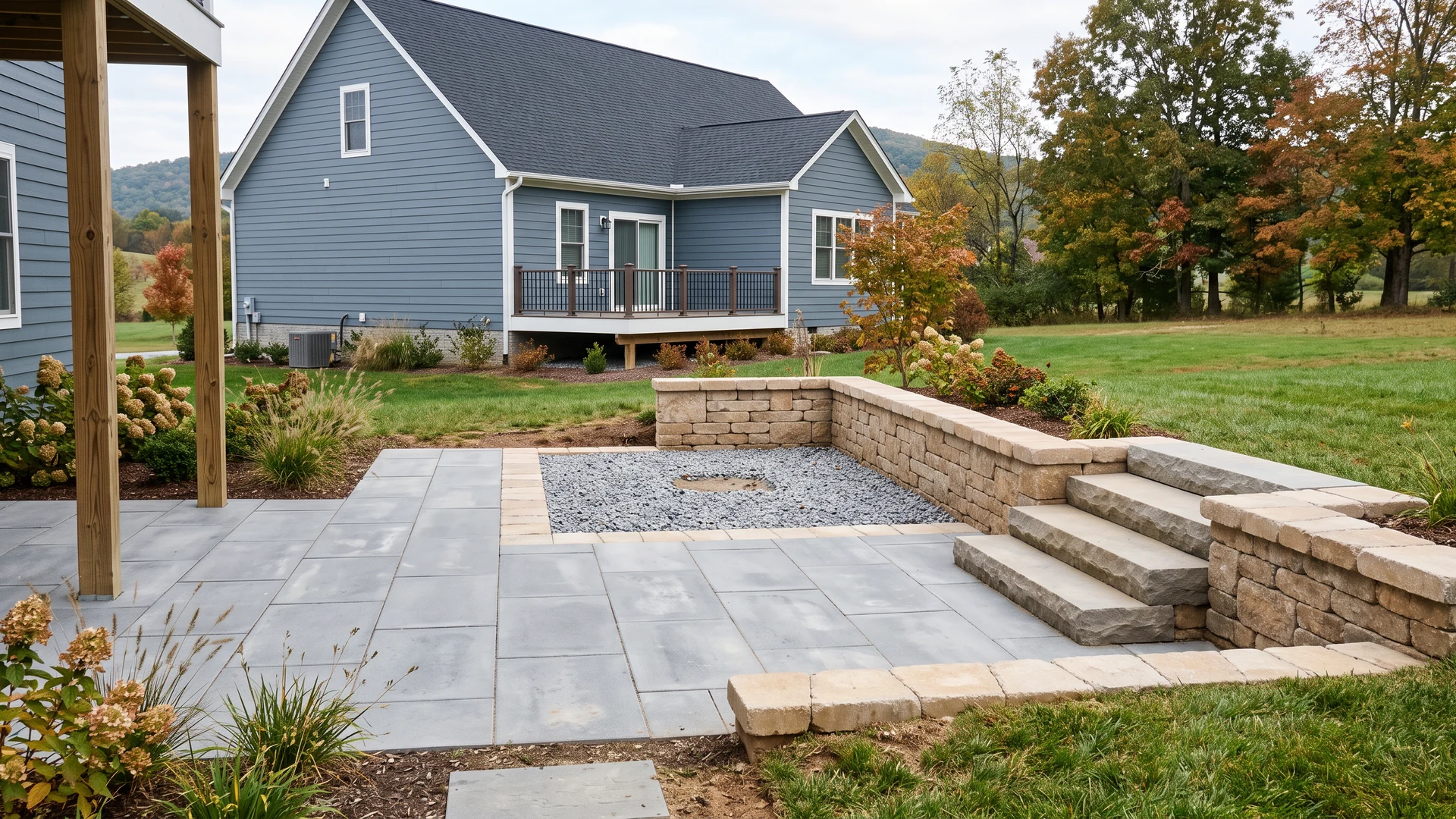
Published by Christiansburg Hardscape Project Guide ·
Before replacing a Christiansburg paver patio, ask whether its problems are concentrated in a repairable section. Sound units may be reusable. The decision depends on the condition below them, the drainage and how the patio now fits the household—not simply its age.
Can the existing pavers be reused, and what must change below or beside them?
List the defects separately
Record rocking units, low spots, broken edges and joints that lose material. Show puddles after rain. Separate surface staining from changes in level. A useful repair request identifies the problems and their history rather than prescribing a quick reset before anyone has assessed the base.
Explain what you want to retain
If the existing color, border or shape still works, say so. Ask about reusing units and about replacement availability for damaged pieces. Include furniture layout and the walking route so the discussion can separate maintenance from a wish for more room. An extension may be sensible, but it should not conceal a drainage issue in the old surface.
Compare the repair boundary
Ask where the proposed repair stops and how it meets untouched paving. If several connected areas are moving, a limited patch may not be the complete answer. A provider should explain the options after inspecting the site. Keep removal, base correction, edge support and any drainage changes visible in the written scope.
Map the movement
For instance, a patio might have a stable dining area and a low route to the yard. Correcting that route could be a different project from replacing the whole patio or adding a second seating area.
The movement patterns are documentation prompts, not an on-site diagnosis.
Create a Christiansburg repair brief
- Wide photographs of the whole work area, the route to the house and construction access.
- Approximate dimensions, the features you want to retain and the changes that matter most.
- Photos after rain, plus notes on when any movement, puddling or damage first appeared.
- A clear list of first-stage requirements and optional later work.
Ask for a written scope that separates preparation, installation, disposal, drainage and restoration. Identify selections that remain open and how a change is approved. A lower total is only a useful comparison when you understand the work included.
Decide reset or redesign
Start with the Paver Patio Installation in Christiansburg, VA guide, then prepare a project request. This is an independent request service, not a local contractor or office. A potential provider is identified before you approve sharing your details.
Use the printable project worksheet to organize the conversation. Requirements depend on the actual scope and parcel, not the town written in a mailing address.
Map low, high and loose areas separately
Use removable chalk or a sketch to mark sunken units, raised units, joint loss and unstable borders. Photograph the whole Christiansburg patio from fixed corners, then take close views with a ruler for scale. After rain, record flow from roofs, uphill lawn and adjacent paving. A line of settlement may follow an old trench, while a broad low area may involve a different condition, but excavation and assessment are needed before deciding.
Do not keep testing rocking units under load. Move furniture and limit use where the surface creates a trip edge.
Define the repair below the pavers
A durable scope describes lifting and salvage, base correction, bedding, compaction, edge restraint, replacement units, joint refill and final drainage. Ask how the reset area will transition to untouched paving and whether the repair changes the surface elevation at doors or steps. If roots are involved, coordinate with an appropriate tree professional rather than cutting them as an incidental paving task.
Cleaning and sealing can follow only if suitable for the identified product. They should not be presented as the cure for base movement.
Know when a repair changes the larger project
If most of the field is stable, a bounded reset may preserve the patio. If access, size or drainage no longer works, compare repair with a documented redesign. The Christiansburg patio service guide and expand-or-replace article help frame that choice. Add the retaining-wall page when a wall supports the edge, and review local drainage planning. Start at the home page to present all symptoms together.
- Map each type of movement separately.
- Photograph conditions during and after rain.
- Record paver identity and available spare units.
- Separate repair necessities from optional redesign.
Prepare the patio for assessment
Move light furniture if it can be done safely, but leave settled units and joints undisturbed. Mark irrigation heads and disclose privately installed power, lighting or drains. Bring earlier photographs if the patio once looked different. If the movement followed a specific storm or nearby excavation, record that timing without presenting it as proof of cause. A clean, documented Christiansburg work area gives the provider better evidence for a bounded repair recommendation.
If repair is not enough and the patio needs to be rebuilt or extended, the paver patio installation in Christiansburg page covers base work, drainage near the house and how to prepare a request.
Related local reading
- Patio, Retaining Wall, or Fire Pit First? | Christiansburg
- Expand or Replace an Old Patio in Christiansburg, VA
- Pavers vs Stamped Concrete in Christiansburg, VA
- Christiansburg Patio, Deck & Retaining Wall Permits
Sources and further checks
Before excavation, review Virginia 811 homeowner guidance, including its explanation of private lines. Local approval details remain in the linked jurisdiction guides; confirm them with the responsible office for your property.
Prepare a project request
Bring your photos, rough dimensions and priorities. Explain what you want to change and where the property is located.
Prepare a project request Call (540) 385-8322