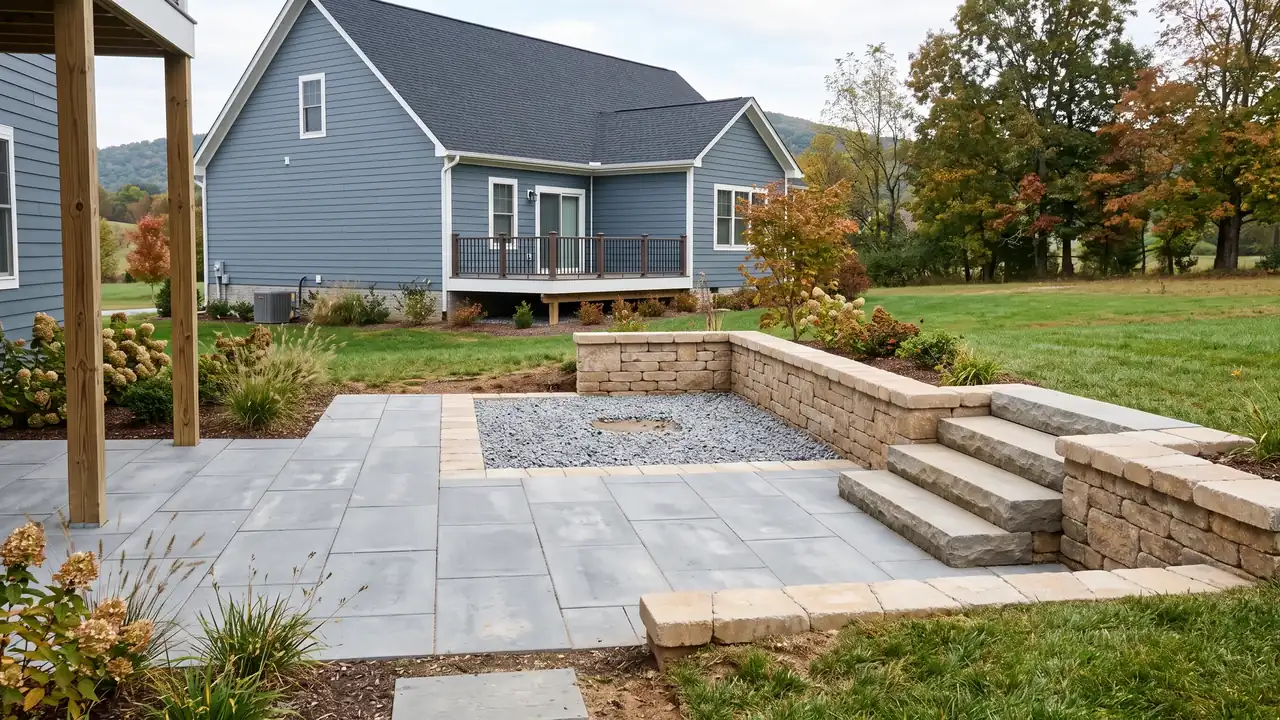
Fire pit installation in Christiansburg, VA combines a supported base, a fire-compatible liner, an outer surround and room to sit and move around it. Built pits and purchased appliances can be treated differently, and the Town publishes burn ban guidance. This website is a request service rather than an installer; it introduces a named local provider only once you approve.
Want a chimneyed fireplace instead? See outdoor fireplace installation in Christiansburg.
Fire pit installation planning in Christiansburg, VA starts with choosing a safe location, a suitable surface, and the right fuel for your yard. This independent project-planning and project-request service is for homeowners considering a built fire pit, an outdoor fireplace, or a simple outdoor-kitchen area. The aim is to define a clear project that a provider can assess before you commit to a layout.
What does fire pit installation in Christiansburg involve?
A built fire pit combines a supported base, a fire-compatible interior, an outer surround, and space for people to sit and move around it. An outdoor fireplace adds a taller structure and a chimney or venting arrangement appropriate to its design. Both need a plan for heat, drainage, nearby materials, and access.
The surrounding surface matters as much as the feature itself. A supported base and drainage plan help limit settling, while a suitable interior protects decorative masonry from direct heat. Ordinary landscape block should not be assumed suitable for the fire chamber. Use the patios and pavers planning page to consider the surface beneath and around the feature.
For a broader starting point, the homeowner project-planning overview explains this site's role, and the hardscape services guide helps connect the fire feature with other project needs.
When should a homeowner plan a permanent fire feature?
A permanent fire pit makes sense when a homeowner wants a defined gathering area and can set aside space for the feature, seating, and circulation. An outdoor fireplace may suit a layout where seating faces one direction. Its height also makes placement more consequential than the footprint alone suggests.
Plan before ordering materials if the yard has a slope, the preferred location sits near a structure, or the project includes a fuel connection. A portable appliance does not establish that a built feature can safely occupy the same spot. If several yard improvements are competing for the same space, read which to plan first: a patio, retaining wall, or fire pit before settling the sequence.
Why can drainage and location cause problems here?
A fire feature in Christiansburg needs a location that works when the yard is wet, not just during a dry afternoon. The Town's Downtown Watershed Study documents flooding within the Towne Branch watershed, including residential areas. That history does not establish flood exposure for an individual property, but it makes drainage a practical planning question.
Record where water collects and where runoff crosses the proposed seating area. A low spot can leave the fire feature damp, affect the supporting surface, and make the gathering area difficult to use. Water retained in vulnerable masonry can contribute to damage during freeze-thaw cycles.
Check the relationship to doors, windows, overhead branches, and combustible materials. Smoke and heat affect placement differently from ordinary patio furniture. Avoid guessing a universal clearance: the chosen appliance or design and the applicable requirements need review before the location is finalized.
What affects the cost of a fire feature?
Fire pit and outdoor fireplace cost depends on the scope rather than a single standard package. A freestanding masonry fireplace generally involves different foundation, masonry, and venting work from a low fire pit. Fuel type, fire-compatible components, finish materials, and the desired seating arrangement also change the work.
Access is another factor. Moving materials through a narrow gate differs from working beside an accessible driveway. Excavation, removal of an existing feature, drainage corrections, and utility routing can add separate tasks.
A useful request distinguishes essentials from preferences. Identify whether the project needs a fuel connection, a new supporting surface, or only a feature on an existing suitable surface. Ask a provider to explain what its proposed scope includes so that different approaches can be compared fairly.
Should you choose gas, wood, repair, or replacement?
A gas fire pit can offer controlled ignition and avoid handling logs and ash, but it needs a suitable fuel supply and components matched to the design. A wood fire pit offers a different fire experience, with smoke, sparks, ash removal, and dry fuel storage to consider. Neither fuel choice removes the need to check placement and operating restrictions.
The Town's published Burn Ban FAQs, checked October 8, 2026, say commercially available chimineas or fire pits that are complete and in good condition are not considered open-air fires. The same guidance describes conditions for approval of recreational campfires, including full containment, a metal screen with openings no larger than one-quarter inch, constant attendance, a twenty-foot area cleared of flammable material, and water, a rake, and a shovel at hand. Do not assume a custom-built feature falls into the commercial-appliance category. Confirm the classification and current restrictions with the Fire Department before use.
For an existing feature, separate surface wear from damage affecting the fire chamber, fuel components, or structural support. Loose masonry, spreading cracks, or movement merit assessment before another fire. Replacement may be appropriate when the location or underlying support is unsuitable; a cosmetic repair does not resolve those problems.
What should a simple outdoor-kitchen area include?
An outdoor kitchen can start with a grill location, a preparation surface, and nearby storage. Plan room to open lids and doors, handle food, and pass behind the cooking position without crowding the fire-feature seating. Choose surfaces and components suitable for weather and their exposure to cooking heat.
Decide early whether the outdoor kitchen needs fixed fuel, electrical service, or water. Those choices affect layout and the questions a provider must answer. A sink also needs a wastewater plan; draining it into the yard should not be assumed acceptable.
Keep the initial request specific. Describe the equipment you expect to use and whether the cooking area and fire feature will share a gathering space.
How do you prepare a fire-feature project request?
Photograph the proposed location from several directions, including the route from the street or driveway. Add rough measurements of the available area, access openings, and nearby structures. Show existing paving, drainage trouble, visible damage, and any equipment you hope to retain.
State the preferred fuel, feature type, and whether cooking facilities are included. Note known buried utilities and request utility location before digging. Include any recorded covenants or architectural-review requirements that may affect the plan.
Ask Town Building Inspections which approvals and inspections apply to the actual design, and confirm zoning questions with the appropriate Town office. Do not assume a built fire feature is exempt from permits.
Requests are accepted from homeowners in the Town of Christiansburg, including the historic Cambria area, and from nearby Montgomery County communities such as Riner, Shawsville, Elliston, Prices Fork, Merrimac and Plum Creek, as well as Blacksburg and Radford. A provider is suggested only when one fits the location and scope, and you are told the provider's name before anything is shared.
Local rules and sources on this page were checked on October 8, 2026. Requirements change; confirm with the responsible office before work begins.
Decide the next part of your project
Use these guides to compare the work, prepare better questions and connect the service plan to the actual property.