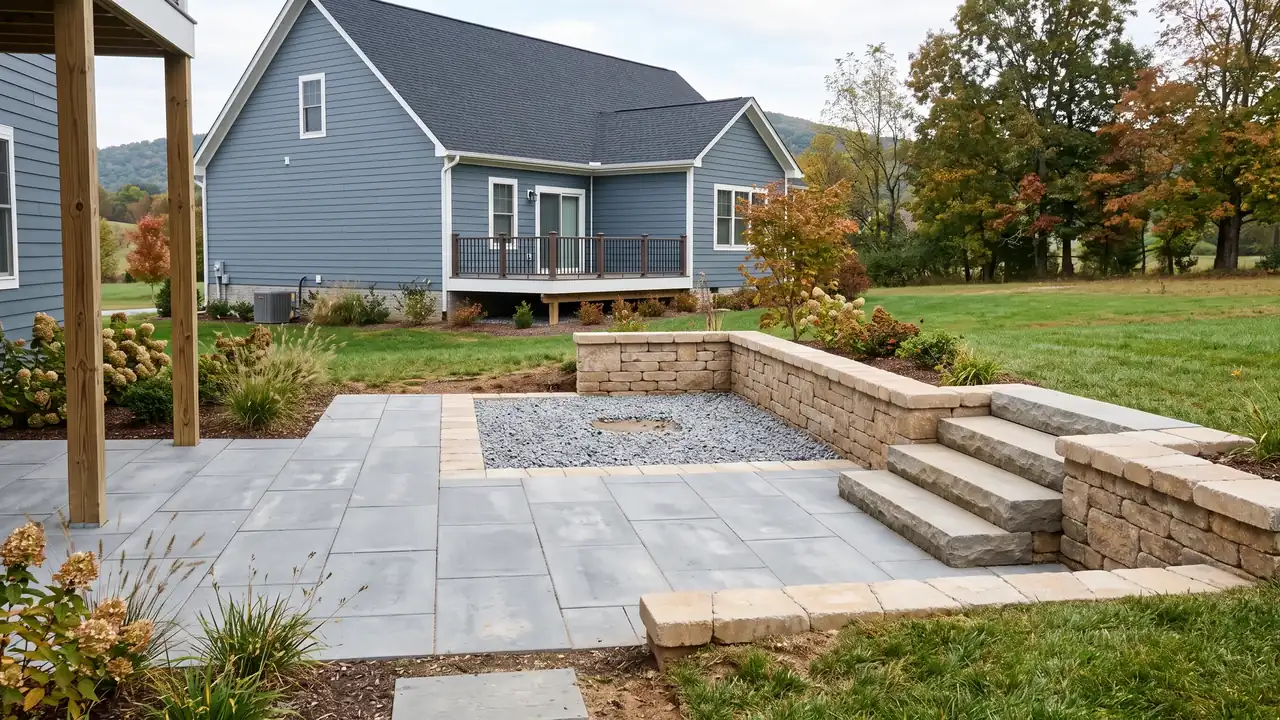
Walkway and outdoor step installation in Christiansburg, VA covers paver and stone paths, garden steps and entry steps on sloping yards. Each needs a compacted base that drains, edges that stay put and steps with consistent risers. Larger step projects can involve Town Building Inspections. This site is not an installer: it prepares your request and names any provider before you agree.
Walkway installation and outdoor steps in Christiansburg, VA, start with understanding the route, the ground beneath it, and where water goes. For homeowners replacing an uneven entrance path or connecting areas at different elevations, a useful plan addresses both everyday footing and long-term movement. Christiansburg Hardscape Project Guide is an independent project-planning and project-request service; the home page explains how project requests and approved introductions work.
What does walkway and step installation in Christiansburg involve?
A new walkway involves more than choosing a surface. Planning establishes where the path begins and ends, how wide it needs to be for its intended use, and how it meets doors, driveways, and existing paving. Outdoor steps also require a clear understanding of the elevation change and room for a comfortable approach and landing.
Construction generally involves excavation, preparation of stable support, drainage planning, and placement of the chosen surface. A paver walkway needs a prepared base, bedding, joints, and edge restraint that work together. Stone steps need secure support beneath each unit; their weight alone does not prevent settlement. Concrete paths need suitable support and joint planning to help manage cracking.
The finished route should shed water without sending it toward an entrance or creating a new collection point. If a walkway connects to an outdoor sitting area, coordinate the junction with patio and paver planning. Broader project choices are outlined in the hardscape services overview.
When do you need a new walkway or outdoor steps?
A walkway project may be useful when the route people actually use is muddy, interrupted, or difficult to navigate. A path that ends short of a door, narrows around an obstacle, or has lifted edges deserves a closer look. Note whether the problem occurs during ordinary use, after rain, or when carrying items between the house and yard.
Outdoor steps become part of the discussion when a route crosses an elevation change that cannot be handled comfortably within the available space. Steps interrupt a continuous walking route, so consider who uses it, including people with mobility limitations. A different alignment may deserve consideration before committing to stairs.
For stone steps on a slope, the hillside and the approach matter as much as the visible treads. Where steps cut into grade and require soil retention, include retaining-wall planning in the request. Describe the relationship between the steps and retained ground so the provider can assess the combined work.
Why can walkways and outdoor steps develop problems here?
Water deserves attention in Christiansburg walkway planning. The Town's Downtown Watershed Study, checked October 8, 2026, describes Towne Branch flowing through Depot Park and documents flooding within its watershed. That finding does not establish conditions at an individual home; it makes checking the property's actual runoff routes worthwhile.
On any site, water can carry away bedding, soften supporting ground, or collect beside a step. Freeze-thaw movement can disturb a surface when moisture remains in susceptible ground beneath it. Uneven compaction, poorly supported edges, and an abrupt transition between old and new work can also create movement or trip points.
A durable walkway plan addresses these causes before selecting the finish. Drainage stone, geotextile where appropriate, and a compacted base each have a purpose; none automatically fixes an unsuitable drainage route. Show where downspouts discharge and where water crosses the proposed path. Persistent sinking or an unexplained ground depression needs assessment before new paving conceals it.
What affects the cost of a walkway or outdoor steps?
Walkway and outdoor-step cost depends on the work required beneath and around the finished surface. Route length, usable width, elevation change, and the number and arrangement of steps define the basic scope. Material choice affects handling, cutting, setting, and the details needed at edges and transitions.
Access also matters. A route reachable with equipment presents different working conditions from a confined passage where excavated material and new units must be moved by hand. Removing existing paving, dealing with buried obstructions, correcting drainage, and rebuilding unstable support can add work that is not apparent in a surface photograph.
For steps, landings, support, and any associated handrail or guard requirements need to be considered before the scope is settled. Connections to existing structures can introduce additional details. Include disposal, access constraints, and restoration of disturbed ground in the request. A provider can then assess the whole project instead of relying on the visible area alone.
Should a walkway or outdoor steps be repaired or replaced?
Walkway repair may make sense when the problem is localized and the surrounding support remains sound. Individual pavers can sometimes be lifted and reset after correcting the bedding or base beneath them. A loose edge may need restraint restored, while an isolated drainage problem may need a change to how water reaches the path.
Replacement deserves consideration when movement is widespread, the route no longer serves the household, or correcting support requires substantial removal. Repeatedly resetting the same area without resolving water or ground movement can leave the underlying problem in place. Outdoor steps with uneven heights or shifting units need assessment of the whole flight, including support and landings.
Material choice should follow the repair assessment. Pavers, concrete, and natural stone differ in joints, surface texture, movement, and how localized repairs are handled. Use the comparison of pavers, stamped concrete, and natural stone to frame preferences, then ask how each suitable option would work on the proposed route.
How should you prepare a walkway or outdoor-step request?
A useful walkway request includes photographs from both ends of the route, a wider view of the surrounding ground, and close-ups of damage. Add approximate length and width, the locations of doors and existing paving, and any known elevation change. For outdoor steps, show the entire flight and both landings. Measurements help describe the project; they do not replace a site assessment.
Include photographs after rain if they reveal standing water or runoff. Note downspouts, utility features, narrow access points, and whether the path is the household's main entrance route. Explain what you want to improve and which existing surfaces you hope to keep.
The Town's published Residential Decks handout, checked October 8, 2026, says adding or replacing steps with five or fewer risers needs no permit, plan, or zoning approval. Confirm how that guidance applies to the complete project with Town Building Inspections. Before excavation, review Virginia 811's homeowner guidance and confirm that the required utility-marking request has been made.
Requests are accepted from homeowners in the Town of Christiansburg, including the historic Cambria area, and from nearby Montgomery County communities such as Riner, Shawsville, Elliston, Prices Fork, Merrimac and Plum Creek, as well as Blacksburg and Radford. A provider is suggested only when one fits the location and scope, and you are told the provider's name before anything is shared.
Local rules and sources on this page were checked on October 8, 2026. Requirements change; confirm with the responsible office before work begins.
Decide the next part of your project
Use these guides to compare the work, prepare better questions and connect the service plan to the actual property.